
Clara Hughes was 47, a six-time Olympic medalist, and sure her stressful job was the problem when it came to her symptoms. She felt like she no longer knew who she was, so she shut things down for a while and spent three years hiking, with six months of each year on the trail. It did not occur to her that hormones might be part of the picture.
She is the only athlete in history to win multiple medals at both the Summer and Winter Games, and her body did extraordinary things. Menopause still hit her like a “freight train”, as she puts it. By her own account, she knew sports physiology inside out and next to nothing about menopause.
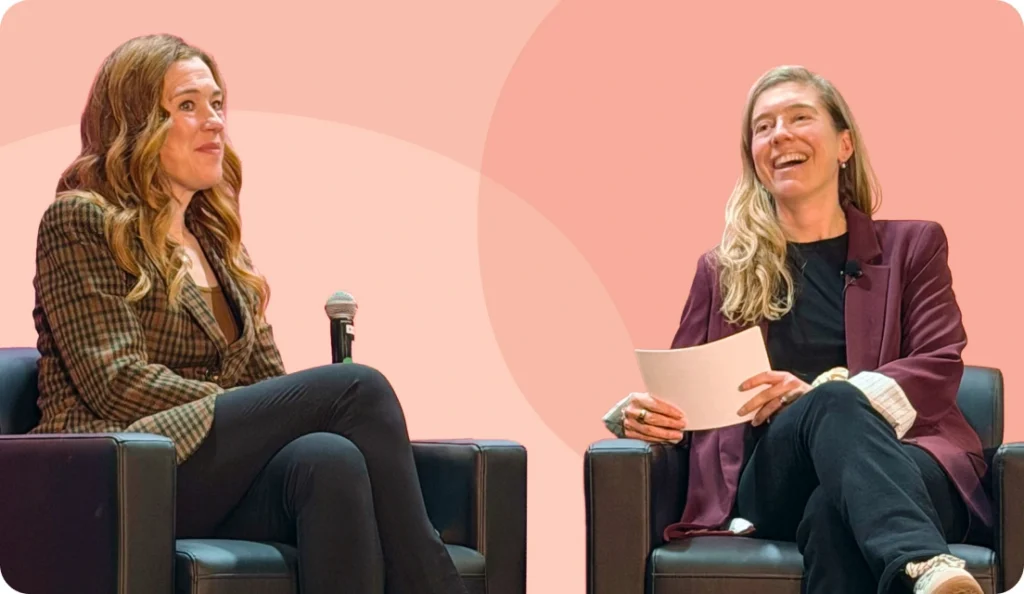
On World Menopause Day, Clara told that story at the National Menopause Show in Toronto, in a conversation with Dr. Ariane Ouellet-Decoste, Coral’s Medical Director. The discussion was part of the tour for her new memoir, Learning to Breathe, which came out that same week
When you blame the wrong thing
Clara blamed work stress for years before anyone connected what she was feeling to her hormones. At 47, she hit a wall. She had spent her life pushing forward, achieving, and moving on to the next goal. So she hiked, living out of a backpack for six months a year. She was, as she puts it, hiking her way through perimenopause without knowing that was what she was doing.
Then menopause arrived, along with a knee injury that kept her off the trail for a year. Movement had been her lifeline. With that gone, she felt like she was losing her mind.
Not the person she used to be
Menopause changed how Clara felt in her body and in her sense of self. Clara had always been a world champion sleeper. Falling asleep fast and waking up recovered was one of her athlete superpowers. Then, in perimenopause and menopause, she suddenly couldn’t sleep. The night sweats had her dripping. She and her husband, Peter, had spent 30 years falling asleep wrapped around each other, and now he was asking her to move over because she was too hot. The days were no easier. She could no longer wear most of her wardrobe. She felt like a walking sauna.
By then, small things were setting her off: she got angry if Peter was ahead when they were riding their bikes together, or if he didn’t do chores he had never done before, and then she got angrier that she had to ask. Eventually she stopped riding with him and stayed home instead, because she didn’t want to fight anymore.
It lasted about three years before she asked whether hormones were involved.
The appointments that missed it
Two doctors heard about hot flashes, night sweats, and mood changes, and both offered Clara antidepressants. She went first to a walk-in clinic, then to a family doctor once she was able to get one. Clara has lived with depression, and she was clear that this felt different. She felt like her menopause was being treated as a mental health disorder, which was not.
Dr. Ouellet-Decoste told Clara she could only imagine how alone she felt after seeking help and not getting the support she expected. She called it a common story.
Clara refused the antidepressant prescription and went back to her family doctor with a new request. He told her menopause wasn’t his area of expertise and sent a referral to a women’s health doctor. Clara was lucky to be able to find someone in the public system.
What good care looked like for Clara
Before that first appointment, held over Zoom, Clara filled out a form with her symptoms and concerns. The doctor had the information in advance, so the visit went to the conversation instead of the basics. Follow-ups came at six weeks and three months, and she could write to the doctor’s assistant between visits with questions.
The line that stayed with her was that no two women are the same. The plan would keep changing, because her body would keep changing.
How long does it take to find the right hormone therapy? Dr. Ouellet-Decoste said it can take up to a year, and that the plan will evolve after that. She also encouraged women to trust what they know about their own bodies, alongside what their doctors tell them.
If you want to borrow from Clara’s experience before your next appointment:
- Write down your symptoms and your questions before you go.
- Ask what the follow-up plan looks like.
- If your doctor says menopause isn’t their area of expertise, ask for a referral.
Hormone therapy and realistic expectations
Dr. Ouellet-Decoste made two points about menopause hormone therapy (MHT): more women with symptoms should have access to it, and it won’t fix everything.
On access, Dr. Ouellet-Decoste explained that a 2002 study, the Women’s Health Initiative, shaped a message that hormone therapy was risky and best avoided. As a result, a whole generation of women went without even basic menopause care. Step one is getting MHT to women who have symptoms and for whom it’s appropriate. Not everyone can take it, and whether it’s right for you depends on your own medical history, so it’s a decision to make with your care provider. But every woman should at least get the chance to have that conversation, and it should be easier and more accessible to start.
For Clara, access made a quick difference: within 48 hours of starting MHT she felt a drastic improvement of her symptoms and her mood was a little better. That is her experience, and every woman’s response is different.
Step two, the doctor said, is remembering that MHT won’t fix everything. Dr. Ouellet-Decoste sees women approach menopause the way they’ve approached every problem before, expecting a quick fix, and then feel let down when it doesn’t work that way.
“That was me, by the way,” Clara said.
Being kinder to yourself
Clara began working with a therapist who specializes in somatic therapy, which looks at the connection between body and mind. She found a gap between her head and her body that surprised her. She is an athlete who competed in two Olympic sports, and she had spent decades directing her body, demanding things of it, and running on fear and shame. Unpacking that took time, and where she has landed is this: “I know that I am enough just as I am.”
When movement came back, it came on gentler terms: everything she kept reading about getting strong again felt like training for an Olympic sport, so she asked a trainer friend to help her make workouts fun. Her favourite trick is what she calls destination exercise. Pick a restaurant or a store a few kilometres away, and walk there and back. Dr. Ouellet-Decoste added that recovery between sessions matters more with age, and that it’s worth asking whether the way you move brings you joy.
Clara also makes room for play, because adults forget to. Her advice for getting started is simple: pick something creative that feels fun, ask a friend to join you, and put it on the calendar.
Why we need each other
Clara traces some of the silence around menopause to shame about women’s bodies, and she believes speaking up is how that changes. Periods, perimenopause, and menopause all get treated as taboo. Clara contrasted that with cultures that lift women up into elderhood, something she says Western culture doesn’t do.
Many women of Gen X, born in the 1970s, have spent their lives taking care of everyone around them, and for a lot of them, the only person looking after them has been themselves. Now they’re done waiting for menopause care to catch up. “We’ve had enough, right?” Change is slowly happening, but it needs to happen now.
Clara’s answer starts with each other: find your people, because nobody gets through this alone. On the morning of the talk, she had watched the Toronto Marathon runners arrive. Hardly any were alone. They came with friends, one carrying a bag, another carrying a water bottle, trotting along to keep up. Strangers lined the route cheering for everyone, including the people who would finish hours behind the winner.
That is what she thinks women in menopause need: someone cheering them on. She pointed out that our culture tells women at this age that it’s all downhill.
She closed the talk with a reading from her memoir. One line from it sums up where she has landed: “I am not becoming anything but me.”
Ready to ask for answers?
If any of this sounds familiar, you don’t have to wait for a rough month, or three years, to ask for help. Explore how Coral supports perimenopause and menopause, or book a call with a Coral care coordinator to see if our care plan is the right fit.
Disclaimer: The information provided here is for informational purposes only. It is not intended as medical advice. Always consult with your doctor or healthcare provider to determine what is best for your individual health needs.
While we use the word “women” for simplicity, we recognize that menopause and perimenopause can affect people of many gender identities. Our goal is to support everyone who experiences these changes.