It’s close to midnight, the lights are off except the one emitting from your phone screen. You typed “menopause diet” into Google on a whim before bed. Seventy-five minutes later you’re still scrolling. One site wants to sell you a 5-day plan to melt belly fat. Another has a before-and-after photo and a “natural estrogen” supplement with a two-week guarantee. A third tells you to cut carbs, dairy, sugar, gluten, and alcohol… as though enjoying a meal was never supposed to be part of life.
None of that is really an eating plan. It’s noise dressed up as one.
Your body’s needs change during perimenopause and menopause in specific, well-documented ways. There’s real research behind which foods help and which ones make things harder, too. No 5-day template, no single “cure” food, no trend. Just what the evidence says, explained in plain language, so you can build something that actually works for your body.
How your nutritional needs change during menopause
Estrogen doesn’t just manage your cycle. It also helps run your metabolism, protect your bones, and shapes how your body handles sugar. So when estrogen drops, several systems lose their backup at once.
Picture estrogen as your coworker who’s quietly been doing three people’s jobs without anyone really noticing: running your metabolism, keeping your bones stocked with calcium and helping your body process sugar. During perimenopause and menopause, your estrogen work bestie gets a new hobby and rightfully cuts back her hours. Those three jobs still need to get done, and they do. But not as well, unless someone else steps in to help. That something is… food!
Your metabolism slows during this hormonal transition, and muscle becomes harder to hold onto. That happens at the exact time appetite and habits often haven’t changed, which is why protein needs go up rather than down. Aiming for a good serving of protein at each meal, not just dinner, helps offset that muscle loss1. and cravings.
Bone loss speeds up too in the years around menopause. That’s why calcium and vitamin D move from “good to have” to very important. Most women need about 1,200 mg of calcium and 800 to 2,000 IU of vitamin D a day, ideally from food first.2
And insulin, the hormone that moves sugar out of your blood and into your cells, becomes less effective as estrogen drops. That’s part of why blood sugar swings and cravings can feel new or worse than they used to.3 We’ll come back to that one.
None of this means your old way of eating was wrong. It just means your body is asking for a bit more backup than it used to.
The best foods for perimenopause and menopause
There’s no single “menopause superfood,” but a small number of eating patterns show up again and again in the research as genuinely helpful, and they split into two jobs: keeping your energy steady day to day, and lowering your risk of the health issues raised by menopause.
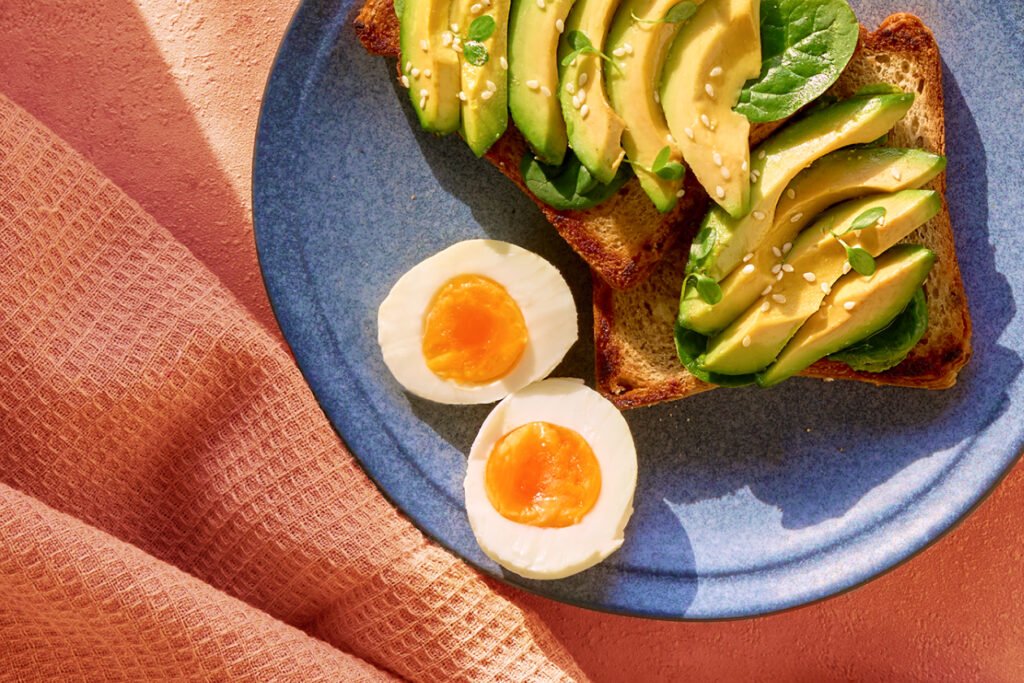
For steady energy. Protein in the morning (eggs, yogurt, or any protein-forward breakfast) helps blunt the mid-morning crash that a bowl of cereal alone won’t. Regular meals rather than skipped ones help keep blood sugar, and mood, more even through the day. That matters more now than it used to, simply because insulin isn’t working as efficiently as it once did.
For lowering long-term risk. The most consistently studied pattern here is the Mediterranean-style diet: vegetables, fruit, whole grains, legumes, olive oil, and fish, with less red meat and less ultra-processed food. One caveat on grains: much of what’s sold as ‘whole grain’ is heavily refined, so look for intact grains like steel cut unrefined oats, barley, quinoa and spelt and always be cautious of portions here.
Women who eat this way tend to have fewer and milder hot flashes, better bone density, and improved cholesterol and blood pressure numbers.4 Fiber does a lot of quiet work too, and most women fall well short of the recommended 25 to 35 grams a day. Closing even part of that gap is linked to better long-term cardiovascular health and a healthier gut.5
Does eating a wider variety of plants really help your gut?
There’s a popular idea that eating 30 different plants a week is the magic number for gut health. The truth is more modest. Research does show that a more varied diet supports a healthier mix of gut bacteria6. That healthier mix, in turn, plays a role in how your body processes estrogen. But “30” specifically is more of a wellness trend than a number backed by a dedicated study. Aim for variety over a precise count. A different vegetable, herbs, seeds and nuts , or legume than you’d usually reach for is enough to count as progress.
Foods high in natural estrogen: how diet influences hormones
Certain plant foods, mainly soy (tofu, edamame, miso), chickpeas, lentils, and flaxseed, contain compounds that act a little like estrogen in the body. The evidence on symptom relief is genuinely mixed, but there’s no real downside to trying them.
These compounds are called phytoestrogens, a family that includes isoflavones (in legumes) and lignans (in flaxseed).7 They’re not a substitute for your own hormones, and they’re not the same as a supplement or medication. They’re plant compounds that can loosely interact with the same receptors estrogen does.
Do they actually reduce hot flashes? The research is inconsistent. Some studies following women with higher soy intake found fewer, milder hot flashes; others found no difference at all.8 Part of the reason may come down to biology: about half of Asian women, but fewer than 1 in 5 North American women, have the specific gut bacteria needed to convert soy into its most active form.9 In plain terms, the same handful of tofu may do more for one woman’s hot flashes than another’s.
Is soy safe to eat during menopause? Yes. Decades of population data on soy-heavy diets haven’t turned up safety concerns at normal food-level amounts.10 Whether it noticeably helps your symptoms is genuinely a “try it and see” situation, not a guarantee.
Foods worth watching during menopause
Alcohol, added sugar, and caffeine are the three worth paying attention to. Not because any single glass or cup is dangerous, but because each one interacts with symptoms you’re already dealing with.
Alcohol and processed, sugary foods both show up consistently in the research as working against you during this hormonal transition. Alcohol disrupts sleep and can trigger hot flashes on its own. Added sugar adds to the blood sugar swings your body is already less equipped to handle.11
Caffeine is the most nuanced of the three, because the research points in two directions. On one hand, coffee has real benefits: regular intake (up to about four cups a day) is linked to better metabolic health and a healthier gut microbiome. On the other, a study following more than 4,000 postmenopausal women in Korea found that those drinking about one cup of coffee a day or more had roughly double the odds of urinary incontinence compared with women who skipped caffeine entirely. A large analysis of sleep studies also found caffeine cuts total sleep time and deep sleep, with middle-aged adults often more sensitive to that effect than younger adults.
The takeaway isn’t to quit coffee. It’s to be intentional about when you drink it: earlier in the day protects your sleep, and if bladder leaks are one of your symptoms, it’s worth a two-week test without caffeine to see if it’s a trigger for you. The same logic applies to that occasional glass of wine. Nothing here undoes your progress; it’s about noticing what makes your symptoms harder to manage.
Reducing menopause belly fat: what the food part can and can’t do
Weight tends to shift toward the belly during menopause because of hormonal changes, not a personal failure of willpower, and no single food, supplement or exercise removes fat from one specific area, no matter what the ad promises.
As estrogen fluctuates and drops, fat storage shifts away from the hips and thighs and toward the abdomen. Insulin resistance compounds that shift, making the fat that lands there easier to gain and harder to lose.12
There’s no food or food group clinically proven to target belly fat specifically. “Spot reduction” through diet isn’t something the research supports, for menopause or otherwise. What is supported is the same strategy from earlier in this piece: giving your insulin less work to do. Blood sugar naturally rises and falls through the day, and that’s normal. The problem is when refined carbohydrates (think white bread, pastries, sugary drinks, packaged snacks, etc.) spike insulin levels to maintain normal blood sugar more than whole, fiber-rich versions of the same foods. Over time, that repeated overproduction of insulin (called hyperinsulinemia) is linked to more visceral fat, the deeper abdominal fat linked to higher health risk.13 Shifting toward a high fiber diet with non-starchy vegetables, good fat like olive oil, unrefined whole grains and protein-forward meals eases that insulin demand.
A practical framework instead of a strict plan
Rather than a rigid 5-day menu, a few principles cover most of what the research supports, adaptable to how you already eat. Build each meal around a protein source first. Fill half your plate with non-starchy vegetables, and reach for low glycemic index fruits like berries when you want something sweet. Carbohydrates don’t always need to appear at every meal (depending on your daily energy expenditure), and most plates carry more of them than people realize; when you do include them, keep unrefined, fibre-rich whole grains to a small portion, less than a quarter of the plate. Finally, space meals so you’re not going long stretches without eating and then over-relying on a snack to get through the afternoon. This isn’t a diet plan so much as a way of building a plate and food habits. Nutrition science is genuinely clear on one more thing: individualized guidance from a dietitian beats a generic template. What works depends on your body, your schedule, and your other health conditions.14
Managing sugar cravings during menopause
When insulin isn’t working as smoothly as it used to, blood sugar rises and falls more sharply after meals. That dip is often what triggers a craving. Your body isn’t being dramatic, it’s asking for quick fuel.15 Poor sleep makes this worse. Several nights of short or broken sleep are enough to increase hunger hormones and next-day cravings, which is part of why a rough night is often followed with a romantic relationship with the snack drawer the next day.16
The single most useful component here is fiber. It slows down how quickly sugar hits your bloodstream after a meal, so the rise is more gradual and the crash that follows it is smaller. Reading labels for fiber content, not just sugar, can reframe how you think about carbs generally. A snack with a similar number of grams of carbohydrate can affect your blood sugar very differently depending on how much of that is fiber. Cutting back on refined sugar first, before worrying about any other food group, is the change most likely to move the needle.
Do sugar cravings ever fully go away? Not entirely, and that’s normal. A sweet tooth doesn’t disappear with age. But the sharp, urgent version of a craving that shows up an hour after a sugary breakfast is very different from an occasional dessert.
How diet works alongside medical treatment
Food can meaningfully support how you feel during menopause, but it’s not a substitute for medical treatment when symptoms are significantly affecting your life. The two work best together, not as a choice between one or the other.
Everything in this article is a good strategy to implement. What you eat can ease symptoms day to day. It can also support your long-term health in ways that show up years down the line. But diet has limits that hormone therapy and other medical treatments don’t, particularly for more severe hot flashes, sleep disruption, or mood changes. Emerging research points to diet and hormone treatment being complementary to each other. A healthier gut environment may even help the body process estrogen more effectively.17
If your symptoms are manageable, food is a legitimate place to start but if they’re disrupting your sleep, work, or day-to-day functioning, that’s worth a conversation with a healthcare provider about what else might help.
Coral’s care coordinators can help you figure out where you stand with your symptoms and whether any of our solutions is the right fit for what you’re dealing with. Book a call to learn more.
Disclaimer: The information provided here is for informational purposes only. It is not intended as medical advice. Always consult with your doctor or healthcare provider to determine what is best for your individual health needs.
While we use the word “women” for simplicity, we recognize that menopause and perimenopause can affect people of many gender identities. Our goal is to support everyone who experiences these changes.
Sources:
- Erdélyi, A., Pálfi, E., Tűű, L., Nas, K., Szűcs, Z., Török, M., Jakab, A., & Várbíró, S. (2023). The Importance of Nutrition in Menopause and Perimenopause-A Review. Nutrients, 16(1), 27. https://doi.org/10.3390/nu16010027
↩︎ - Plantz MA, Bittar K. Dietary Calcium and Supplementation. [Updated 2024 Jul 19]. In: StatPearls [Internet]. Treasure Island (FL): StatPearls Publishing; 2026 Jan-. Available from: https://www.ncbi.nlm.nih.gov/books/NBK549792/ ↩︎
- Erdélyi, A., Pálfi, E., Tűű, L., Nas, K., Szűcs, Z., Török, M., Jakab, A., & Várbíró, S. (2023). The Importance of Nutrition in Menopause and Perimenopause-A Review. Nutrients, 16(1), 27. https://doi.org/10.3390/nu16010027 ↩︎
- Liu, Y. C., & Guo, Z. Q. (2025). Dietary interventions and nutritional strategies for menopausal health: a mini review. Frontiers in nutrition, 12, 1702105. https://doi.org/10.3389/fnut.2025.1702105 ↩︎
- Erdélyi, A. (3) ↩︎
- Lim, M. J. S., Parlindungan, E., See, E., Gan, C. H., Yap, R., & Yong, G. J. M. (2026). Diet, the Gut Microbiome, and Estrogen Physiology: A Review in Menopausal Health and Interventions. Nutrients, 18(7), 1052. https://doi.org/10.3390/nu18071052 ↩︎
- Lethaby, A., Marjoribanks, J., Kronenberg, F., Roberts, H., Eden, J., & Brown, J. (2013). Phytoestrogens for menopausal vasomotor symptoms. The Cochrane database of systematic reviews, 2013(12), CD001395. https://doi.org/10.1002/14651858.CD001395.pub4 ↩︎
- Ibid. ↩︎
- Chen, L. R., Ko, N. Y., & Chen, K. H. (2019). Isoflavone Supplements for Menopausal Women: A Systematic Review. Nutrients, 11(11), 2649. https://doi.org/10.3390/nu11112649 ↩︎
- Lethaby, A. (7) ↩︎
- Brończyk-Puzoń, A., Piecha, D., Nowak, J., Koszowska, A., Kulik-Kupka, K., Dittfeld, A., & Zubelewicz-Szkodzińska, B. (2015). Guidelines for dietary management of menopausal women with simple obesity. Przeglad menopauzalny = Menopause review, 14(1), 48–52. https://doi.org/10.5114/pm.2015.48678 ↩︎
- Baek, J. M., Song, J. Y., Lee, S. J., Park, E. K., Jeung, I. C., Kim, C. J., & Lee, Y. S. (2016). Caffeine Intake Is Associated with Urinary Incontinence in Korean Postmenopausal Women: Results from the Korean National Health and Nutrition Examination Survey. PloS one, 11(2), e0149311. https://doi.org/10.1371/journal.pone.0149311 ↩︎
- Wang, H., Shi, F., Zheng, L., Zhou, W., Mi, B., Wu, S., & Feng, X. (2025). Gut microbiota has the potential to improve health of menopausal women by regulating estrogen. Frontiers in endocrinology, 16, 1562332. https://doi.org/10.3389/fendo.2025.1562332 ↩︎
- Erdélyi, A. (3) ↩︎
- Ibid. ↩︎
- Ibid. ↩︎
- Lim, M. J. S. (6) ↩︎