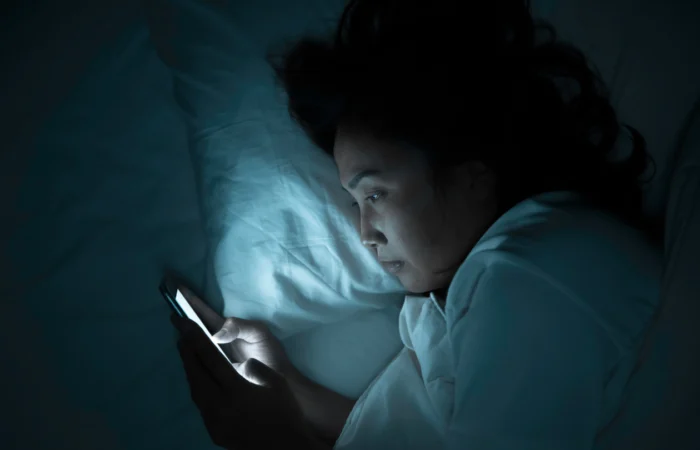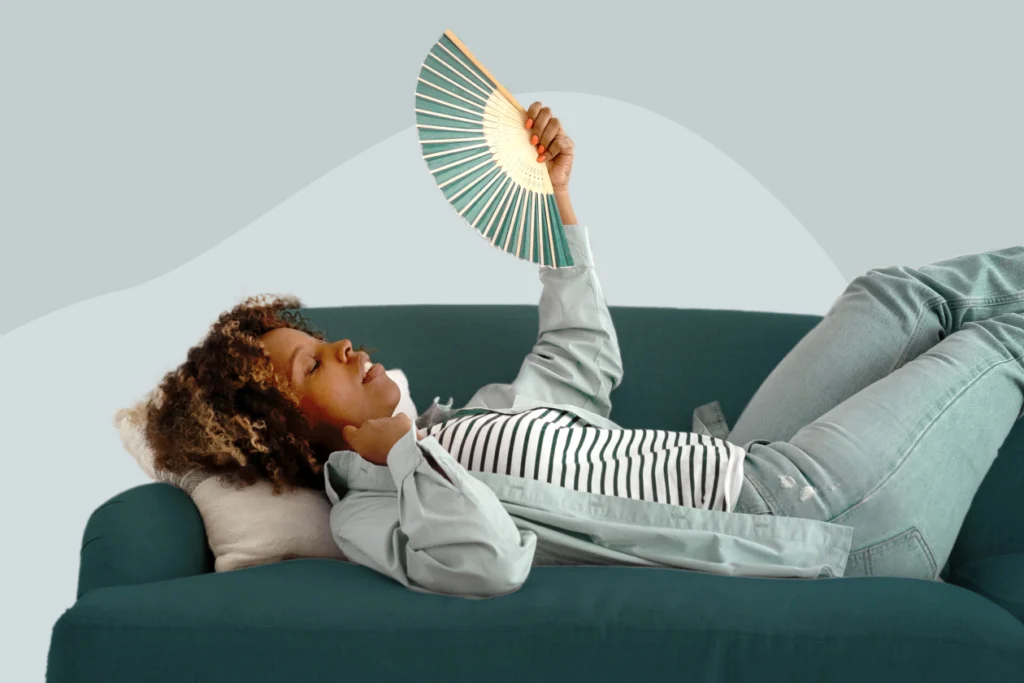
Even if you’ve always been the “cold” one, never leaving the house without a sweater, you may find yourself flinging open the windows–even in the dead of winter–and still sweating buckets in your 40s and 50s. (Welcome to perimenopause!)
Temperature dysregulation, manifesting as the ever infamous hot flashes and night sweats is a neurological event and one of the most visceral and recognized signs of the menopausal transition. But you need not suffer in silence. Understanding why is the first step toward regaining your cool.
What’s happening to your hypothalamus?
Your brain has a built-in thermostat called the hypothalamus. Estrogen plays a critical role in maintaining its “goldilocks zone” —the range of body temperature where you feel “just right.” As estrogen levels fluctuate and fall, this balanced zone shrinks and more “too hot” and “too cold” feelings creep in.
Suddenly, even a tiny change in room temperature or a minor stress response (or even nothing at all!) triggers a “red hot alert.” Your brain mistakenly thinks the body is overheating and initiates an aggressive cooling response: the dreaded hot flash or night sweat (Freedman, 2014).
Is it in your DNA? (AKA the “mom” factor)
One of the most frequent questions we hear is: “Will I go through what my mother did?” The short answer is: Likely, yes. Research shows a strong genetic component to the severity and duration of night sweats and hot flashes.
A major study identified specific genetic variants in the KISS1 gene—which helps regulate the hypothalamus—that are linked to increased risk for hot flashes (Crandall et al., 2017). If your mother was a “super-flasher” (experiencing symptoms for 10+ years), you are statistically predisposed to a similarly sweaty trajectory.
The risks you can’t feel
New data suggests that intense hot flashes are more than a nuisance; they are a canary in the coal mine for cardiovascular health. Frequent and persistent symptoms are often linked to endothelial dysfunction, meaning your night sweats may be your body signaling a need for better heart protection (Thurston et al., 2021).
How to treat it
1. The gold standard: Hormone therapy
By replenishing estrogen, we widen the brain’s “comfort window.” This expands your body’s ability to tolerate minor temperature changes without triggering an emergency cooling response.
- Timeline: Most women see a reduction in flashes within 2–3 weeks, with full stabilization around 3 months (Pinkerton, 2020).
- Duration: There is no longer an end date for hormone therapy; it’s a personal decision based on your ongoing quality of life.
2. The new frontier: Veozah (Fezolinetant)
This non-hormonal neurokinin 3 (NK3) receptor antagonist blocks the “heat trigger” in the brain’s thermostat.
3. Evidence-based alternatives
- Black cohosh: This botanical supplement has been shown to be effective for some, but it requires caution regarding liver toxicity. Medical oversight is recommended. (Shams et al., 2010).
- Acupuncture: This healing modality can significantly lower the frequency and severity of flashes by calming the autonomic nervous system (Avis et al., 2016).
Rediscovering equilibrium
Managing temperature dysregulation is about more than just finding better pajamas, sheets, or a cooling pillow. It’s about acknowledging that your brain is undergoing a major metabolic recalibration.
Whether you choose hormonal support, targeted neuro-inhibitors, or lifestyle-led interventions, the goal is the same: restoring your brain’s ability to find balance.
At Coral, we don’t just treat the sweat; we treat the system. By monitoring your cardiovascular markers while managing your symptom relief, we ensure your menopause transition isn’t just “tolerated,” but optimized for the decades of health that lie ahead. You don’t need to manage the heat alone. We’ll help you “fix” your thermostat and protect your future health.
Disclaimer: The information provided here is for informational purposes only. It is not intended as medical advice. Always consult with your doctor or healthcare provider to determine what is best for your individual health needs.
References:
- Avis, N. E., et al. (2016). Acupuncture in Menopause (AIM) study: a pragmatic, randomized controlled trial. Menopause, 23(6), 626–637.
- Crandall, C. J., et al. (2017). Genetic variation in the tachykinin receptor 3 locus is associated with hot flashes and night sweats in the Women’s Health Initiative Study. Menopause, 24(3), 252–259.
- Freedman, R. R. (2014). Menopausal hot flashes: Mechanisms, endocrinology, and treatment. The Journal of Steroid Biochemistry and Molecular Biology, 142, 115–120.
- Pinkerton, J. V. (2020). Hormone Therapy for Postmenopausal Women. New England Journal of Medicine, 382(5), 446–455.
- Shams, T., et al. (2010).
- Efficacy of black cohosh-containing preparations on menopausal symptoms: a meta-analysis. Alternative Therapies in Health and Medicine, 16(1), 36–44.
- Thurston, R. C., et al. (2021). Menopausal Hot Flashes and Risk of Incident Cardiovascular Disease Events in the SWAN. JACC: Cardiovascular Imaging, 14(10), 1955–1966.