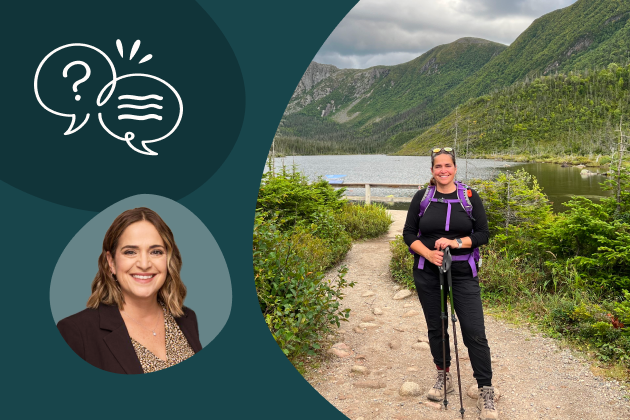
Her diverse background, profound personal health transformation, and dedication to learning shapes Nicole’s signature mix of empathy and evidence-based strategy that she brings to every session.
Q: Your path to coaching wasn’t exactly linear. What led you here?
My “previous life” was in marketing and branding, but everything changed in my 40s when I faced a traumatic brain injury and thyroid cancer all at once. Between a history of chronic stress and a two-year sick leave, I had to learn how to heal my own brain and body. I dove into training at Harvard Medical School and the Institute for Integrative Nutrition—not to start a new career, but just to survive. Once I experienced the power of the knowledge I was learning firsthand, I knew I had to share it.
Q: What’s the biggest misconception women have about working with a coach?
Many women think coaching is only about nutrition or exercise. Or that they’ll need to overhaul their entire lives and start fresh. But the real work is often managing their “mental load.” At Coral, we start with a 43-question Quality of Life Review to see where their energy is actually going and then help redirect it towards the things that matter most to them.
Q: You mentioned that you aren’t “naturally disciplined.” (Although you are now!) How does that influence your coaching style?
I used to dislike routines completely. But I learned they are essential for healing. I help my clients find “grace with structure.” For example, rather than always sitting for long meditations at the same time every day, I use the “Stop, Breath, Be” technique (by Dr. Aditi Nerurkar) throughout the day. It’s a quick and powerful practice to interrupt the stress cycle, regain calm, and cultivate a more grounded presence.
Q: Your alternative education emphasized critical thinking. How does that translate to your medical practice?
It shapes my approach to patient communication. I can’t just do something because I have to do it—I need to know why. I practice evidence-informed medicine, which takes into account research studies as well as the patient’s views, and values shared patient-clinician decision making.
Q: What’s one piece of advice you find yourself giving most often?
I try to encourage the women I meet with to show themselves more compassion and forgiveness—but without ditching accountability. We’re often so much harder on ourselves than we would ever be on a friend. And that inner voice is counterproductive to feeling better. My job as a coach is to help reframe that thinking, introduce a new sense of serenity, and work on introducing small, daily habits that actually stick.
Disclaimer: The information provided here is for informational purposes only. It is not intended as medical advice. Always consult with your doctor or healthcare provider to determine what is best for your individual health needs.